The Sip Society
Sign In
The Matcha Collective
Details
Hosted at:
Denny's Coffee Corner
Next Collective:
Oct 03, 2025, 11:45 AM
Experience Curator:
TBD
Featured Specialty:
TBD
Join the Guest List
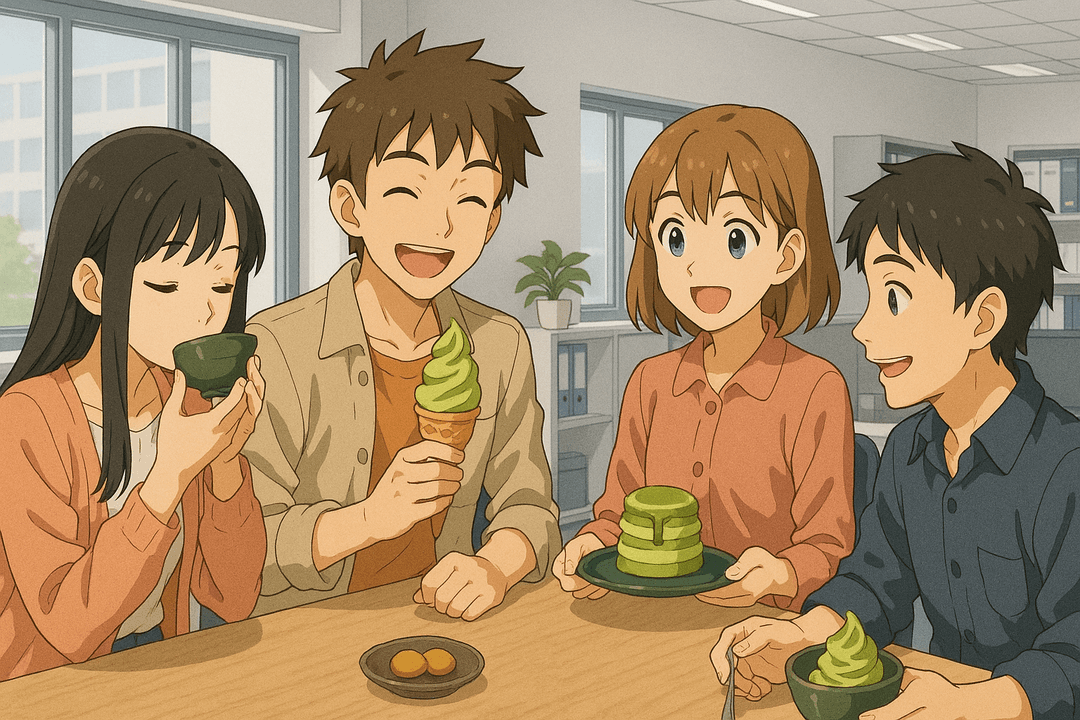
Join in and enjoy a delicious matcha specialty with friends!
Sign in to join the list
00:00:00 left to join the list
0 joined — The list closes at 5 people!
This could be you on the list...

Leaderboard
Celebrate your matcha journey and see how you rank among fellow enthusiasts!
Top 10 All-Time Matcha Enthusiasts
Scoring:
50 points per event, 10 points per secret.
Additional points from gifts.
Tie-breaker: earliest first order.
No participants yet.
Satisfied Customers
Hear from our happy matcha lovers!
Madhu K
Silky mouthfeel and uplifting energy—no jitters. The tasting flight was a clever idea.
Andrea M
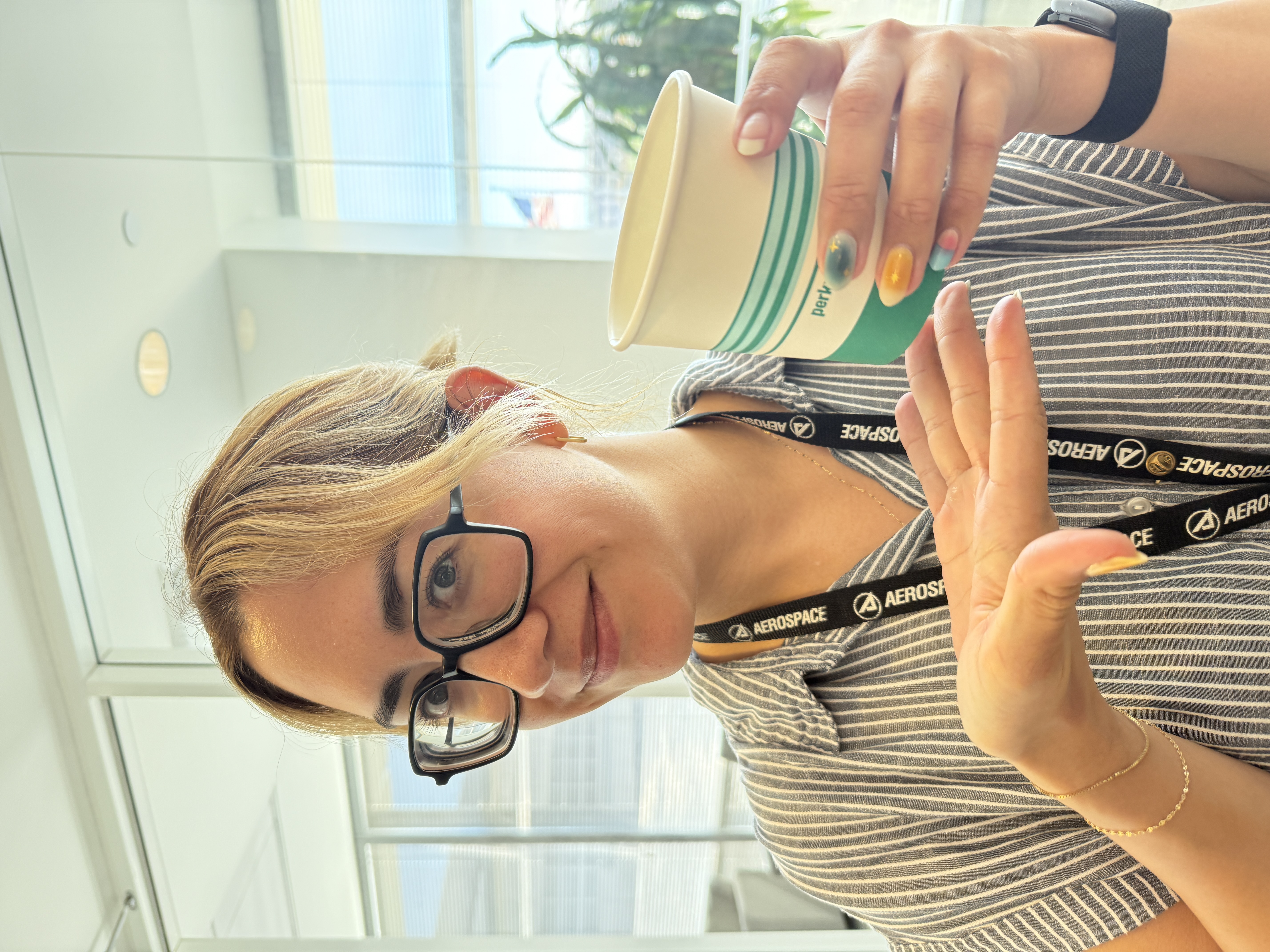
The ceremonial grade was velvety and bright. Easily the smoothest matcha I've tried—no bitterness at all.
Celeste
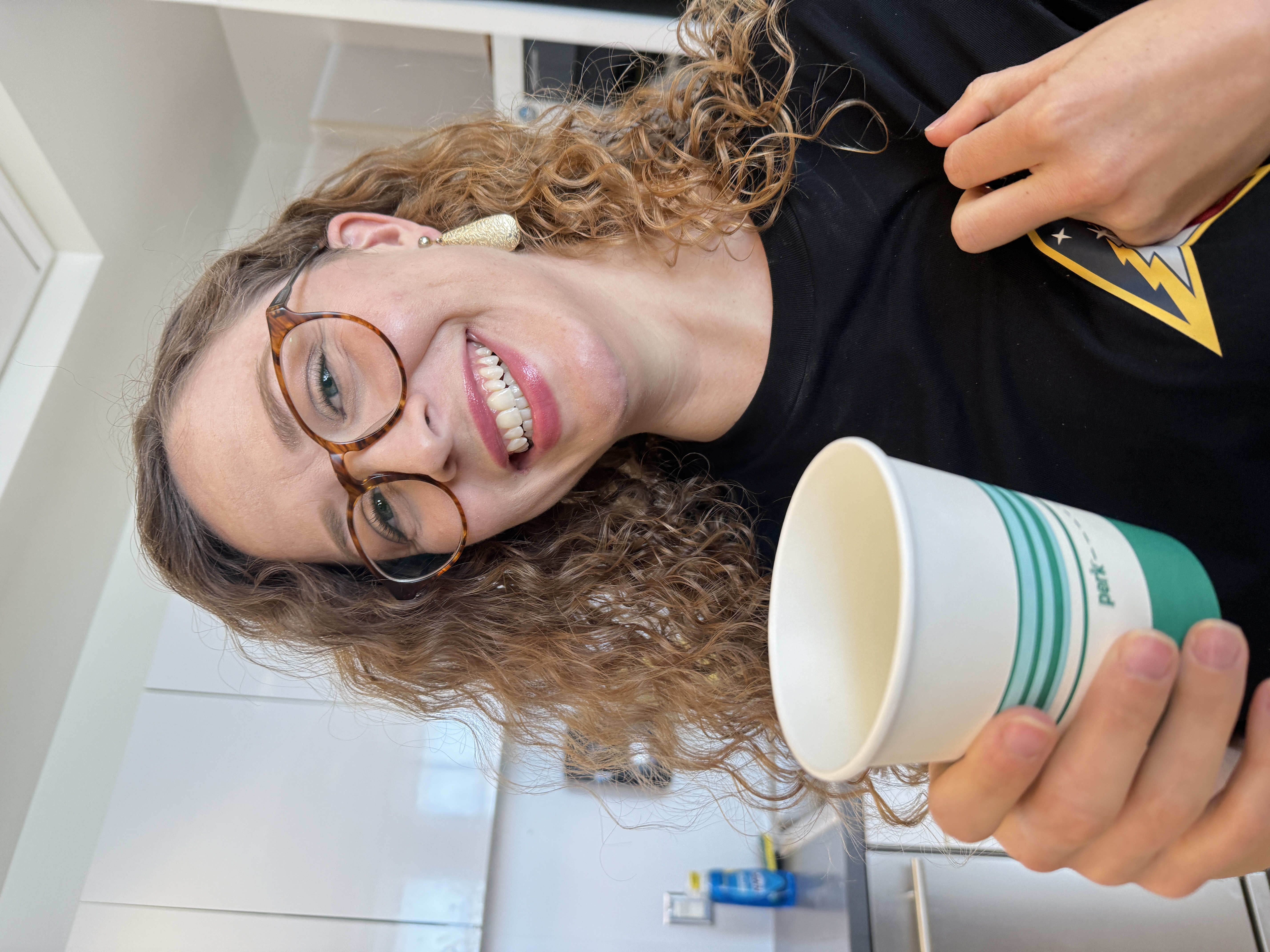
Calming space, friendly team, and a latte that actually tastes like real matcha. I'm hooked.

Ashton C
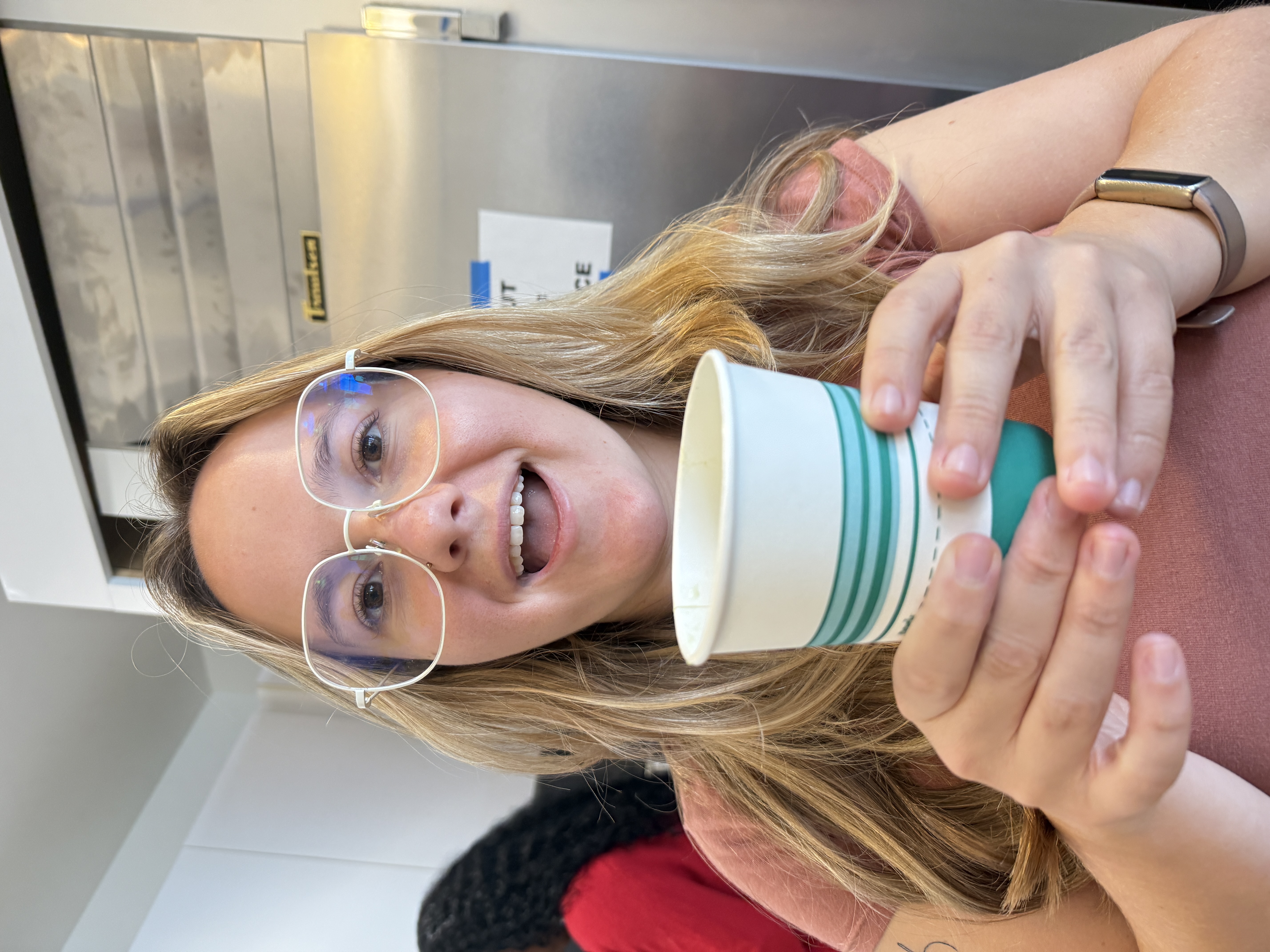
Rich umami and a clean finish—plus the staff guided me through whisking like a pro.
Denny L
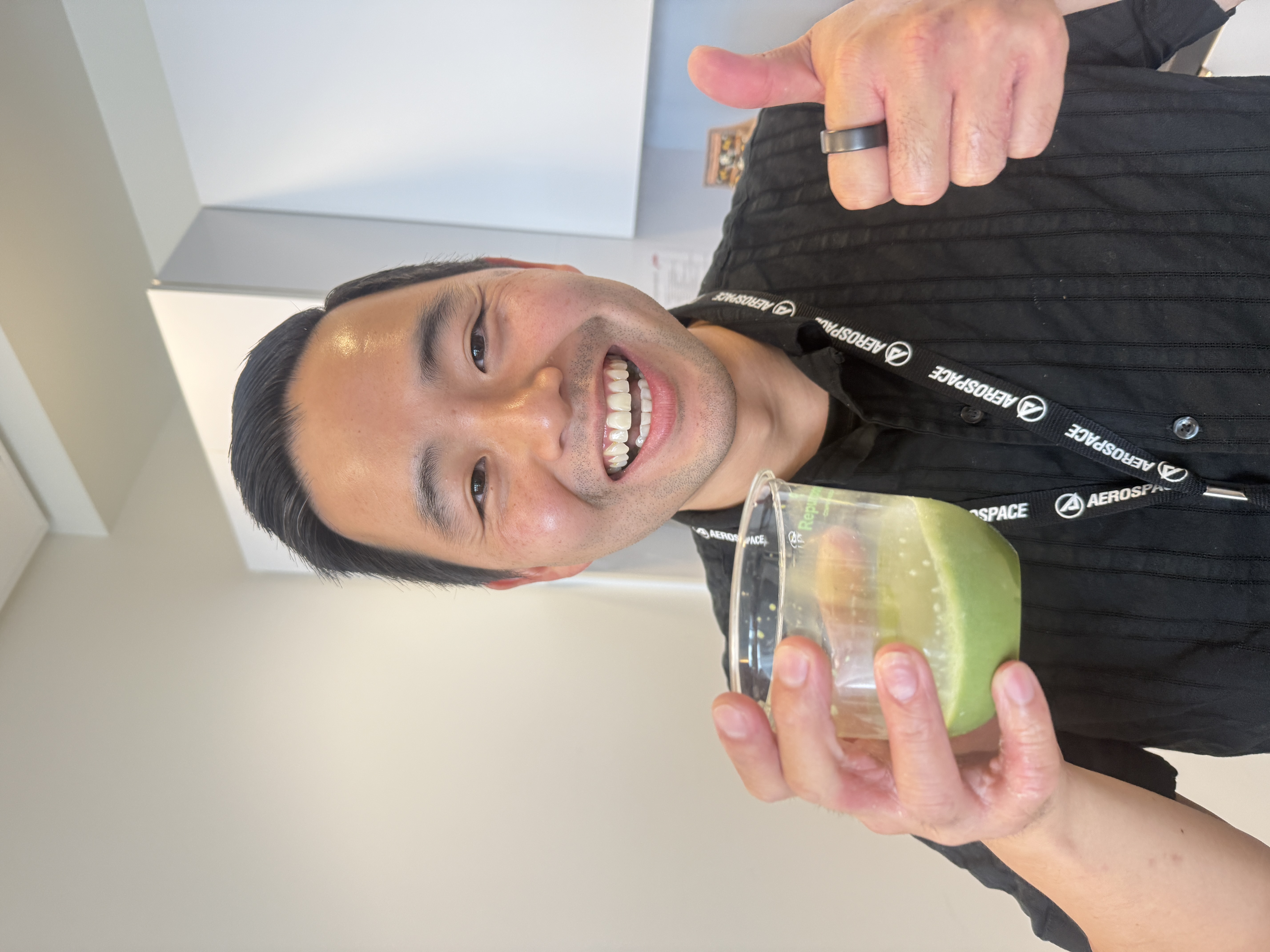
Cozy vibe and authentic preparation. The whisking ritual was a highlight for me.
Stephanie Hotz
Great menu variety and knowledgeable staff. I learned a lot about proper preparation.
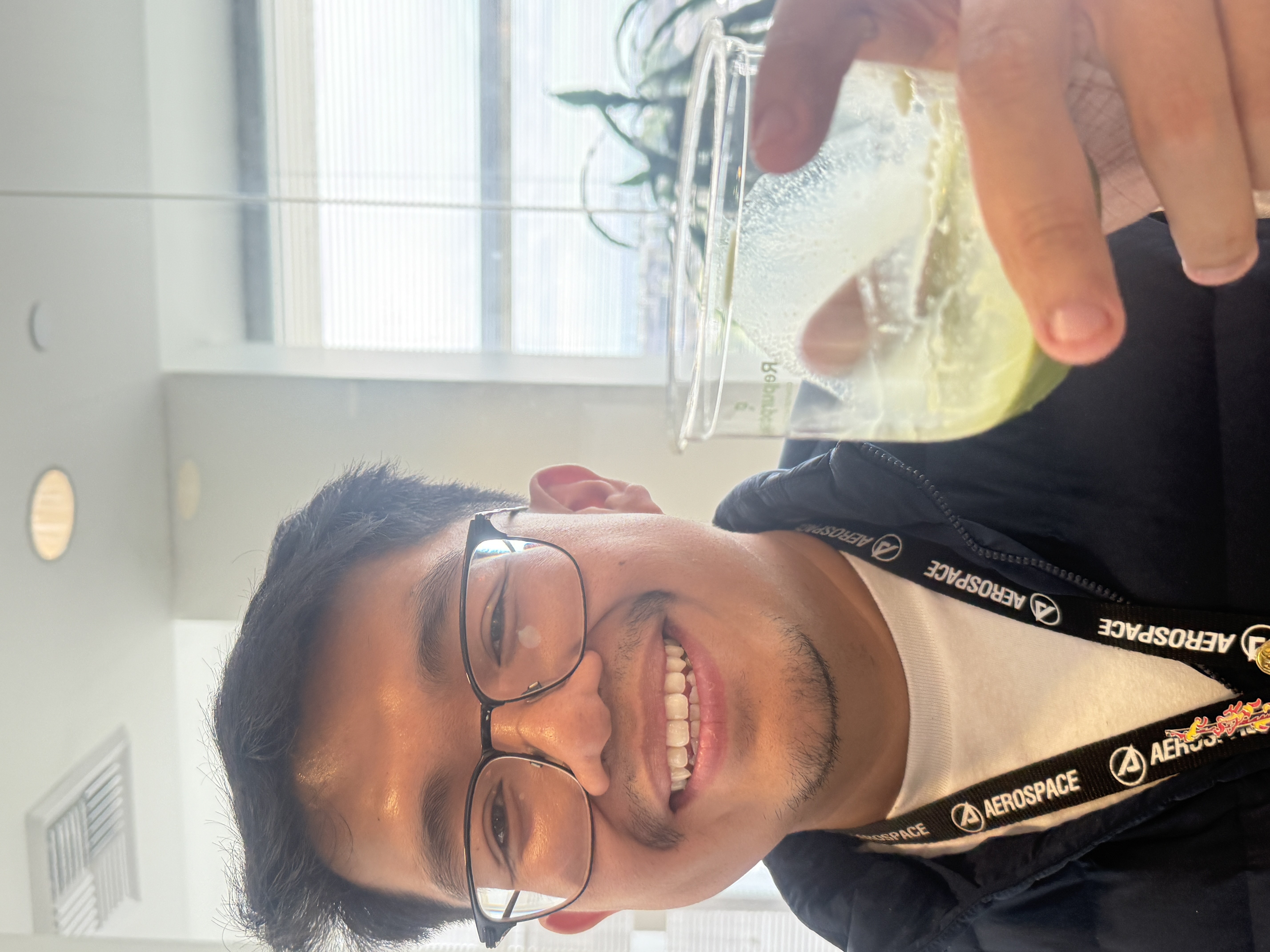
Dearo Y
Best matcha experience I've had—vibrant color, creamy texture, and balanced flavor. Perfection.
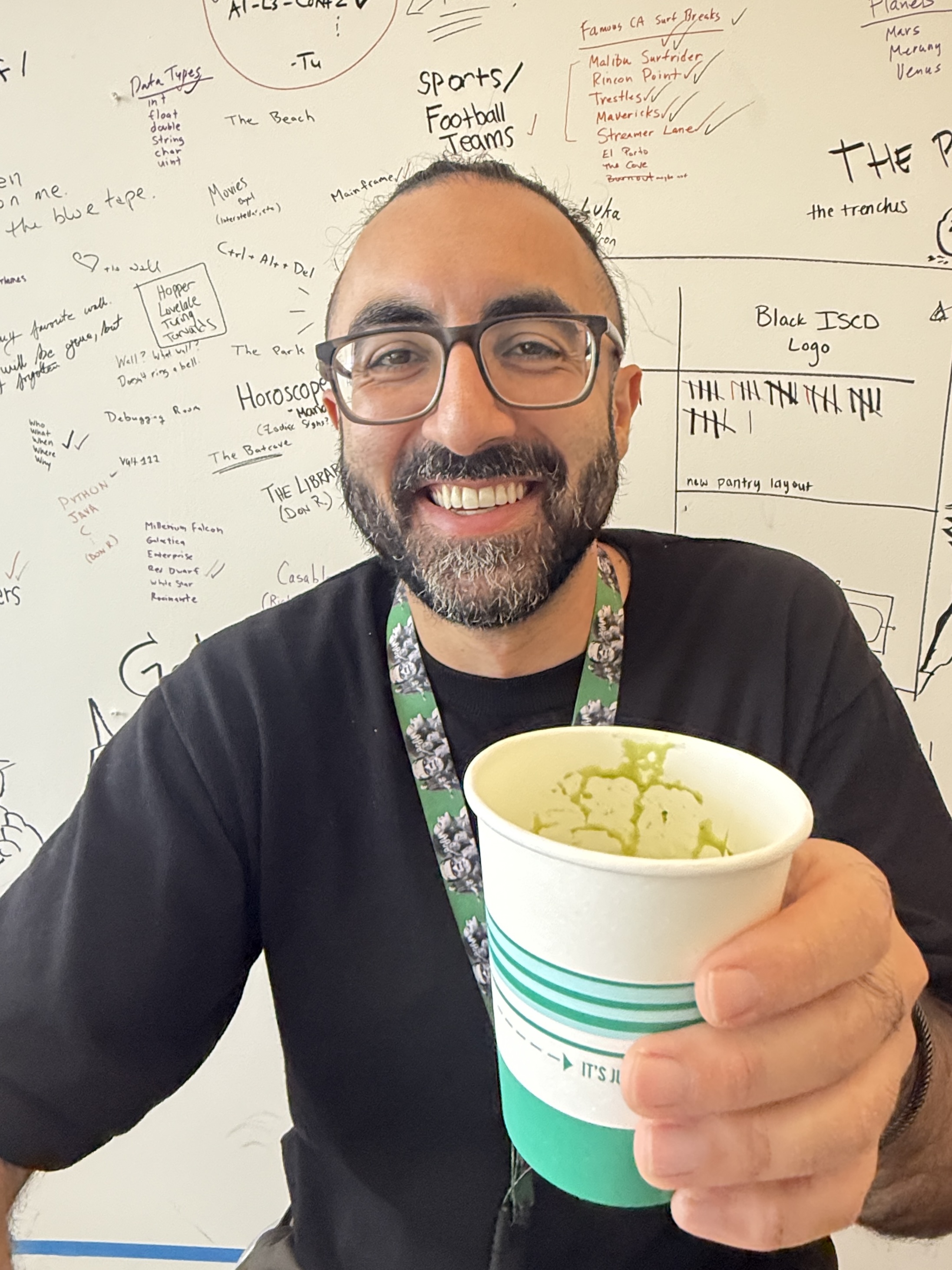
Krikor G
After one cup I knew this was my forever matcha. Pure, balanced, and clearly crafted with care.

Nicholas O
Balanced, vibrant, and zero bitterness. This instantly replaced my usual coffee routine.
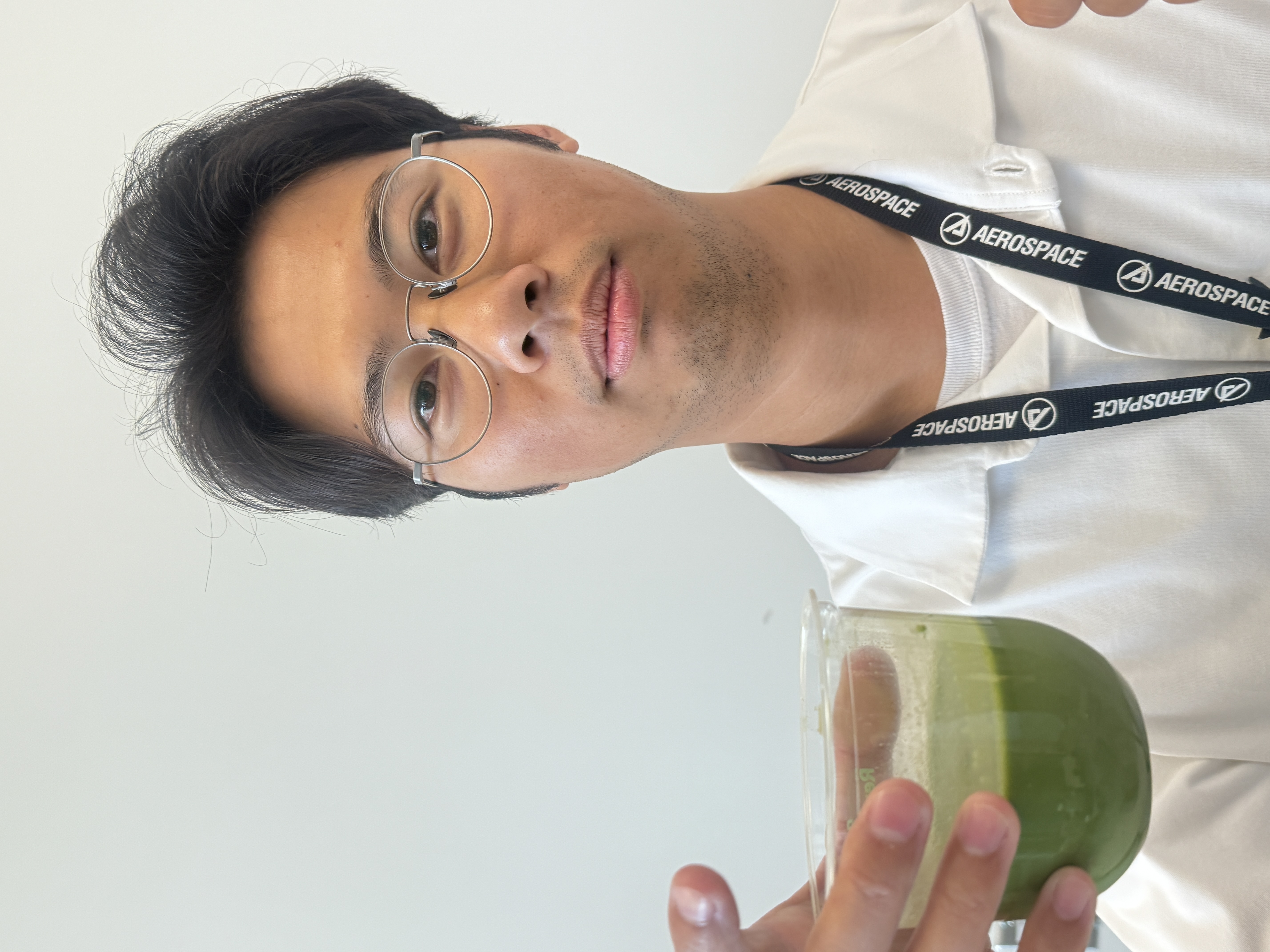
Ryan C
Desserts were standouts—the tiramisu + a warm bowl was an elite pairing.

Joshua C
Great depth of flavor—earthy, sweet, and clean. I appreciated the detailed sourcing info.

Nikita M
Balanced umami and gentle sweetness. Loved the dessert pairing suggestions.
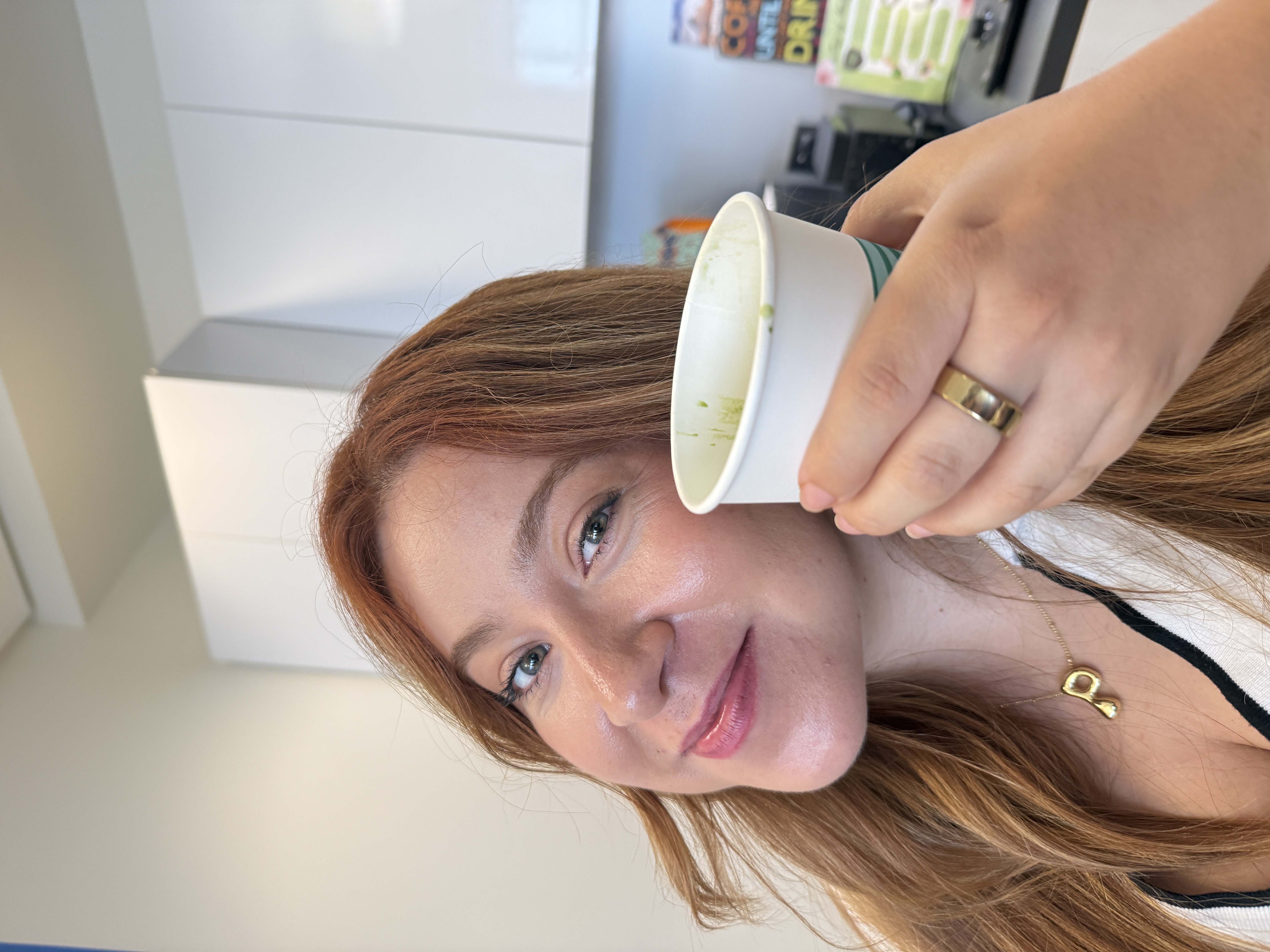
Paris A
The iced matcha was smooth and bright without tasting grassy. New daily ritual unlocked.
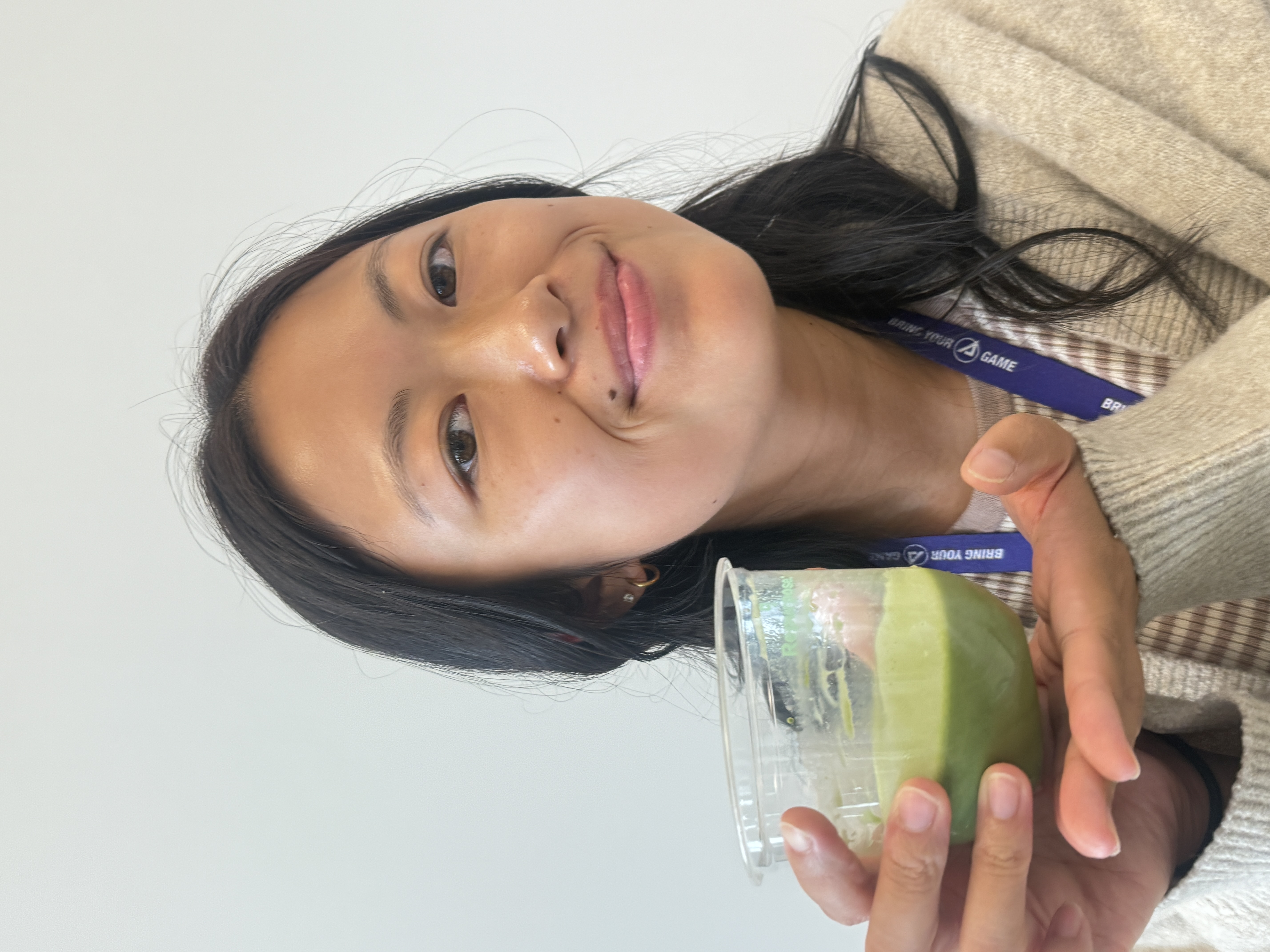
Stephanie He
Refined taste—no chalkiness, just clean layers of sweetness and umami.
Loading...
Discover the World of Matcha
From ancient traditions to modern lattes — everything you need to know about matcha in one place.
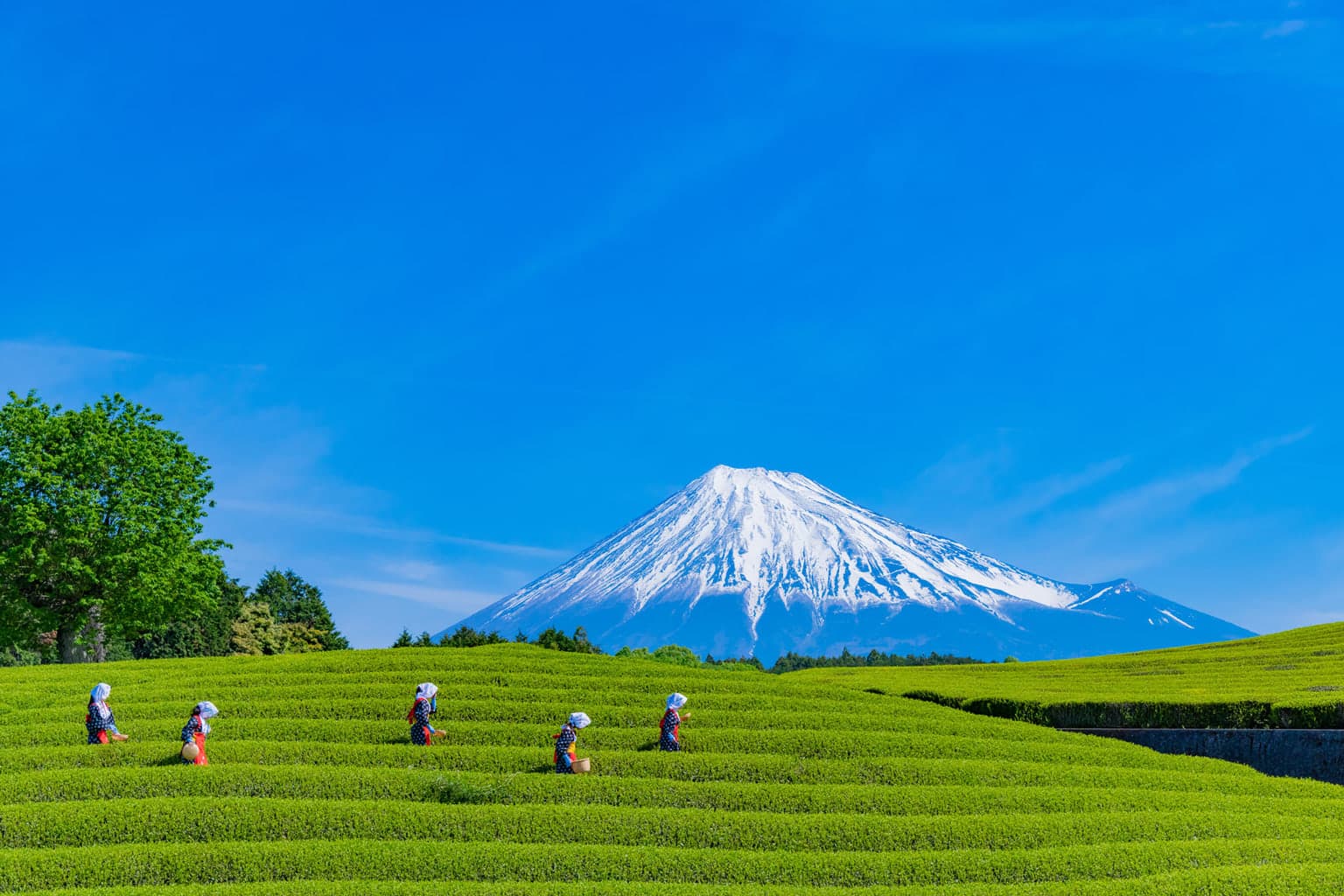
What is Matcha?
Matcha is finely ground powdered green tea, shade-grown and stone-milled. Unlike regular tea, you drink the entire leaf.
Matcha vs Green Tea
Matcha
Higher nutrients & antioxidants; whole-leaf powder; more caffeine per cup.
Green Tea
Steeped leaves; lighter flavor; fewer nutrients per cup.
History & Origins
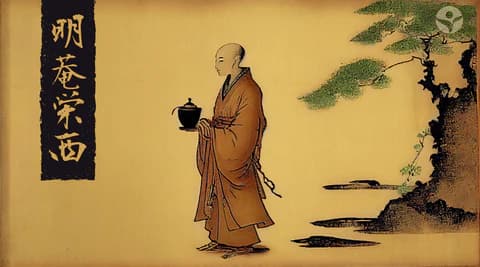
8th century — China
The earliest powdered teas appear in Tang dynasty China where Buddhist monks used powdered leaf as part of ritual and daily practice. The preparation emphasized whisking and drinking the whole leaf for sustained energy.
12th century — Japan (Zen monks)
Zen monks brought powdered tea culture to Japan. Over the following centuries, the practice evolved into the highly codified chanoyu (tea ceremony) with aesthetics, hospitality, and mindfulness at its core.
Samurai & refinement
By the medieval period, matcha was embraced by samurai for focus and ritual. Tea masters refined grinding, grading, and presentation — distinctions that still define ceremonial and culinary grades.
Modern cafés & global revival
In the 20th and 21st centuries matcha traveled worldwide, finding new life in cafés, lattes, desserts, and health culture — while ceremonial traditions continue to be preserved and celebrated.
Quick timeline
8th–12th c.
Powdered tea in China → transmission to Japan with Buddhist practice.
14th–17th c.
Ritualization in Japan: formal tea procedures, utensils, and aesthetic principles emerge.
19th–20th c.
Industrialization and export broaden matcha’s availability; modern grading systems develop.
21st c.
Global café culture blends traditional matcha with new formats: lattes, baking, and wellness products.
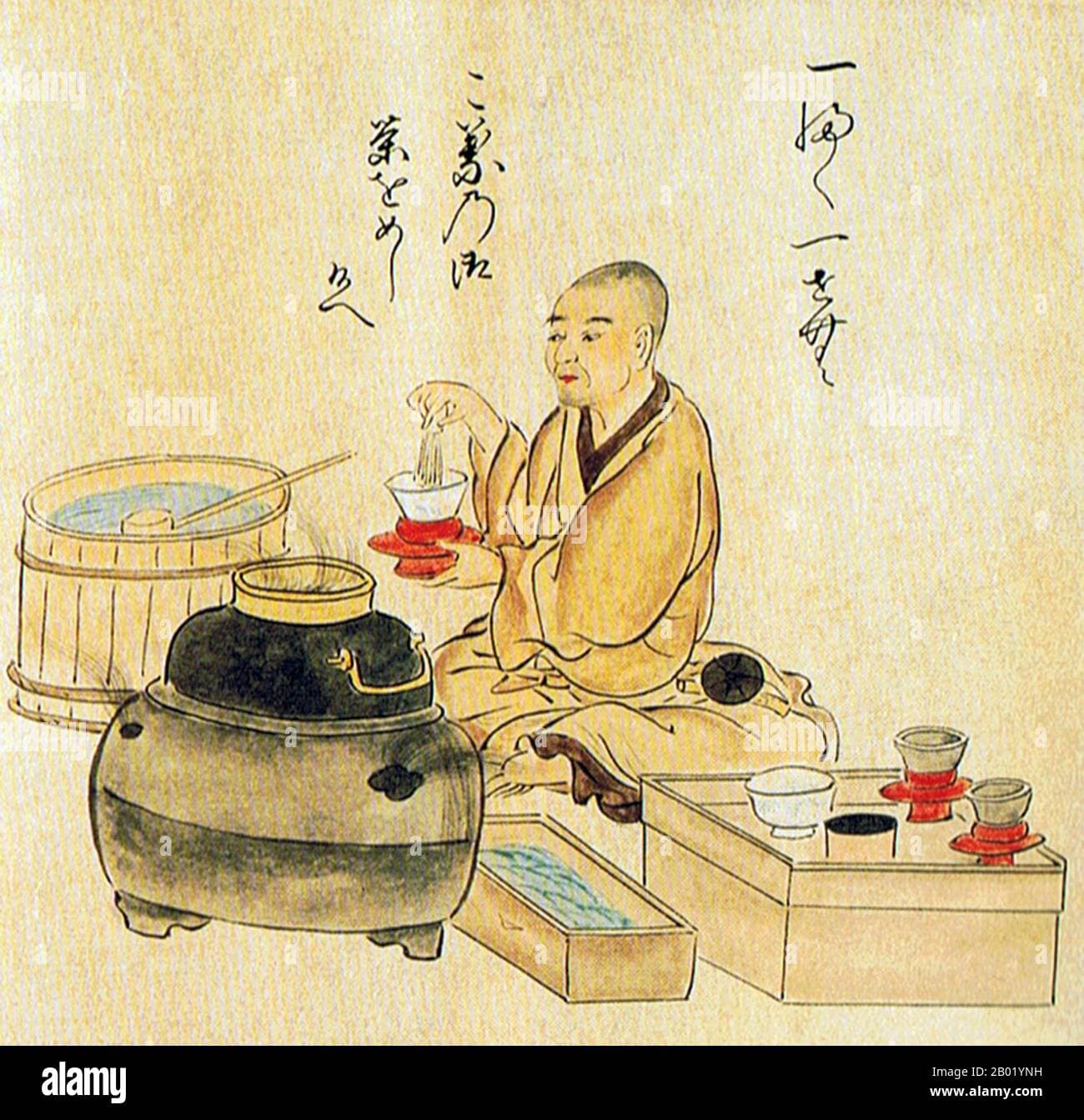
“A single cup of matcha is said to bring harmony to mind and spirit.”
The ceremonial roots of matcha emphasize hospitality, intentionality, and the aesthetics of simplicity — values that shaped how matcha is enjoyed for centuries.
The tea ceremony (chanoyu) influenced Japanese arts such as calligraphy, flower arranging, and ceramics — all part of a connected cultural practice.
How It’s Made
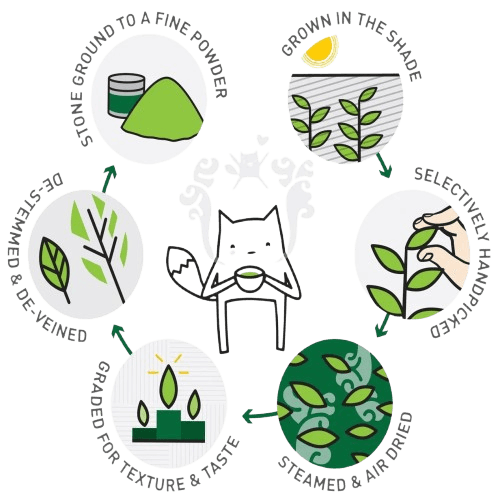
Shade-grown
Plants are shaded to boost chlorophyll and amino acids.
Hand-picked
Young leaves are selected for the highest quality.
Steamed & dried
Leaves are quickly steamed to preserve color and nutrients.
Stone-ground
Stone mills grind leaves into the fine powder known as matcha.
How to Prepare Matcha
Traditional method
Use a bamboo whisk (chasen) and tea bowl (chawan). Sift 1-2g of matcha, add ~70ml hot water (80°C), whisk in a quick M or W motion until frothy.
Small cup, big benefits.
⚡ Energy + Calm
Caffeine + L-theanine for steady focus.
💚 Rich in antioxidants
Up to 3x more than green tea.
🧠 Improves focus
Supports memory and attention.
❤️ Heart health
May support cardiovascular health.
🛡️ Boosts immunity
Rich in polyphenols and nutrients.
Fun Facts & Trivia
💡 Did you know?
Matcha is powdered green tea made from shade-grown leaves called tencha.
Tencha is the specific leaf product used for matcha: plants are shaded before harvest, leaves are steamed and deveined, then dried. That powder is what we call matcha, consumed whole rather than steeped.
Recipes
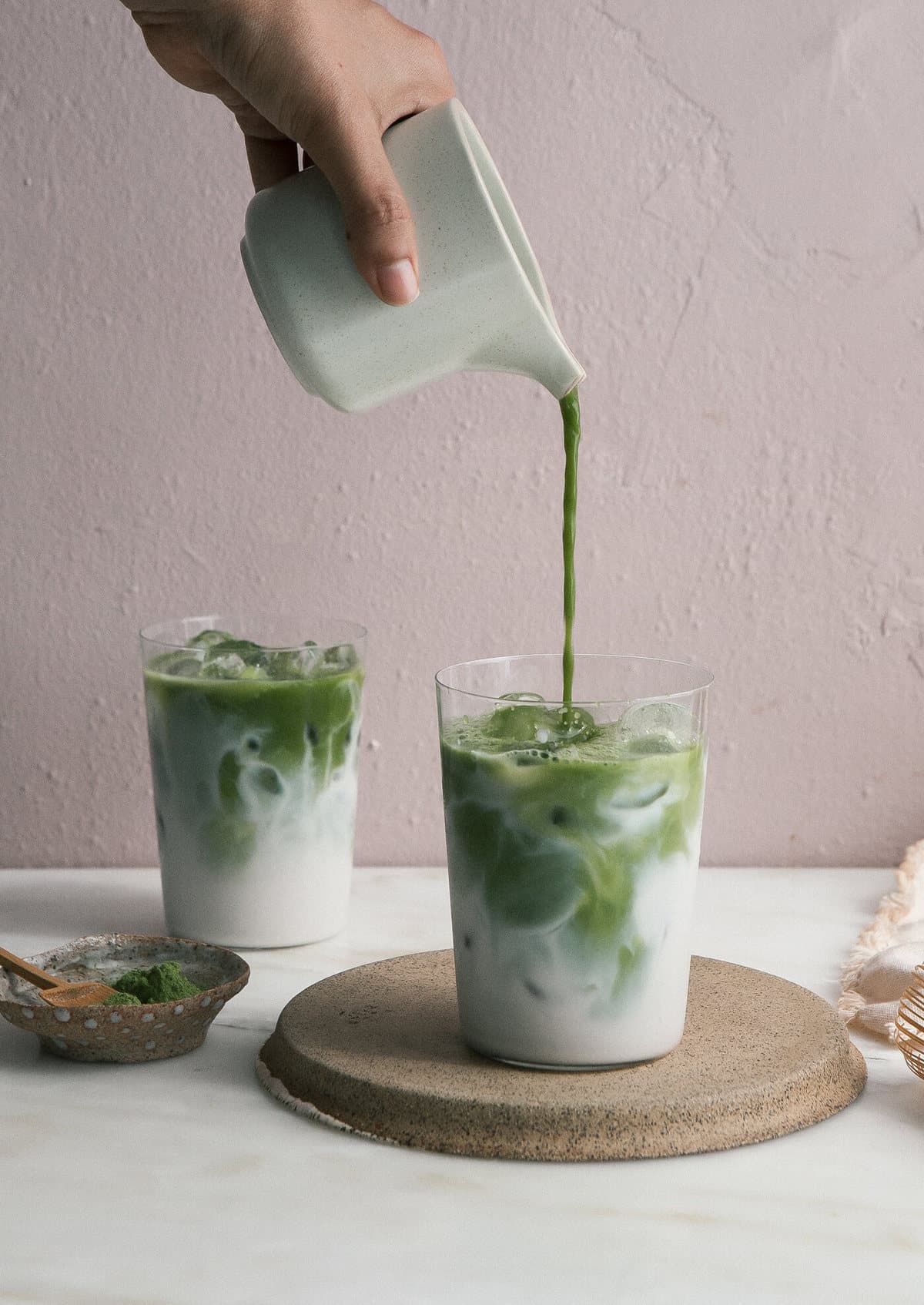
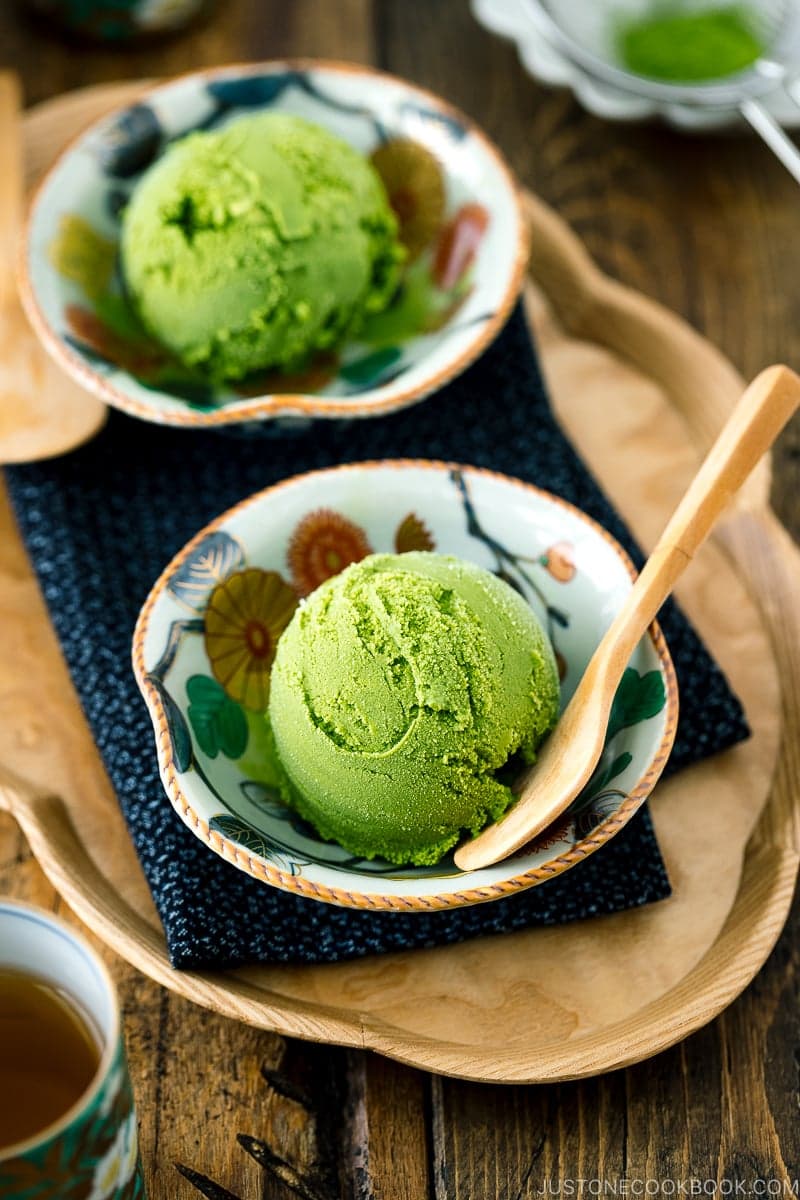
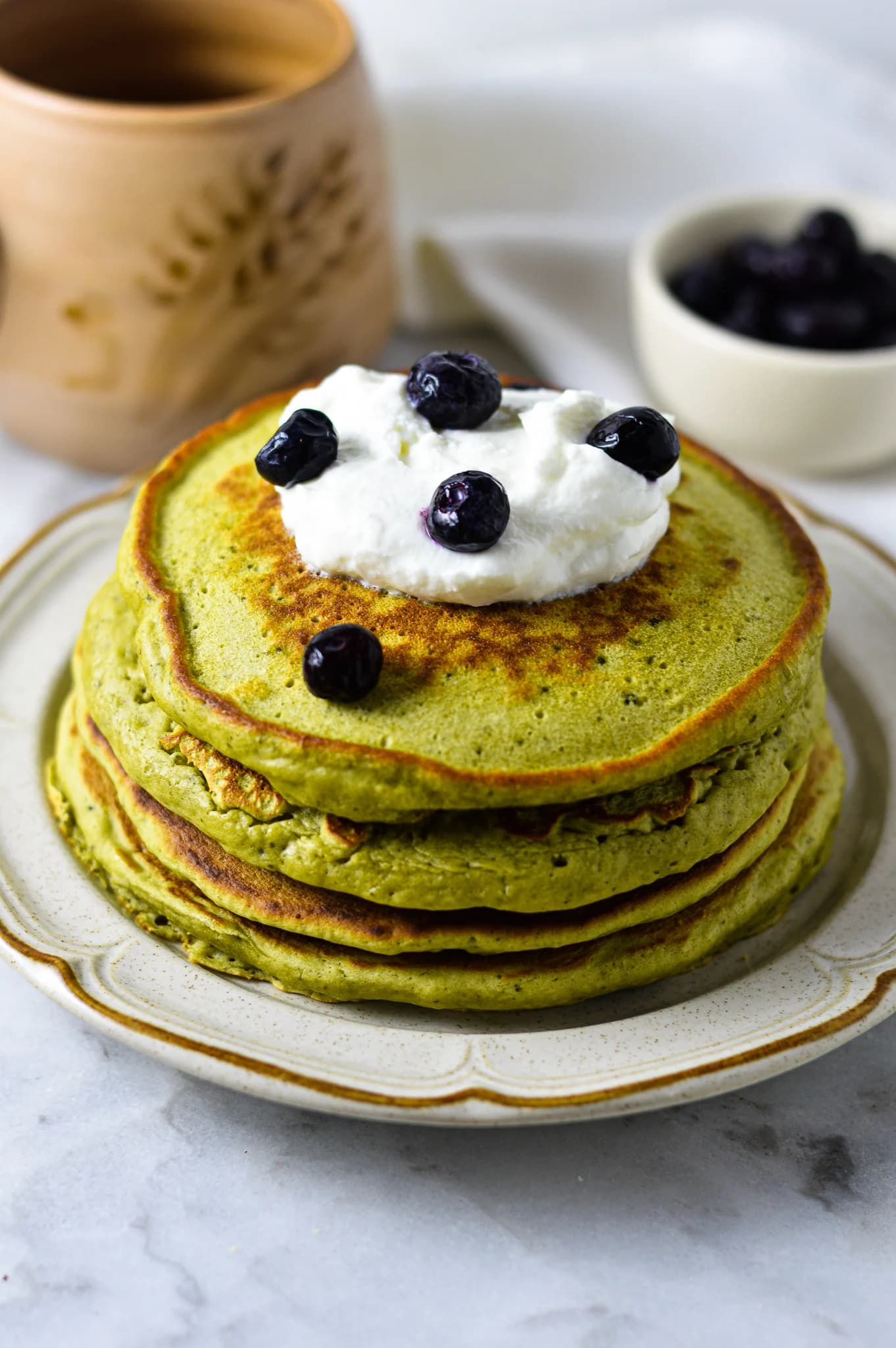
Matcha Around the World
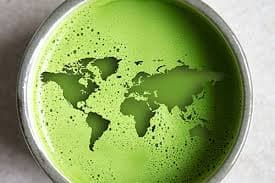
While matcha’s ceremonial home is Japan, its flavors and uses have been adapted everywhere — from ritual bowls in Kyoto to creamy lattes in Melbourne. Below are regional notes and how local cultures reinterpreted matcha.
Japan
The heart of ceremonial matcha: precise grade distinctions, tea rooms, and ritual preparation. Ceremonial-grade matcha is reserved for tea ceremony and formal hospitality.
Korea
Rapidly growing café culture blends matcha with local tastes — iced matcha, sweetened lattes, and dessert pairings are popular.
USA & Canada
Cafés and home cooks favor culinary-grade matcha for lattes, baking, and smoothies. Expect creative hybrids and sweetened menu items in many cities.
Europe
Patisseries and specialty cafes use matcha in pastries, chocolates, and modern desserts — often pairing it with citrus and stone fruits.
“From temples to TikTok — matcha connects cultures while keeping space for local creativity.”
Mindfulness & Tea Ceremony
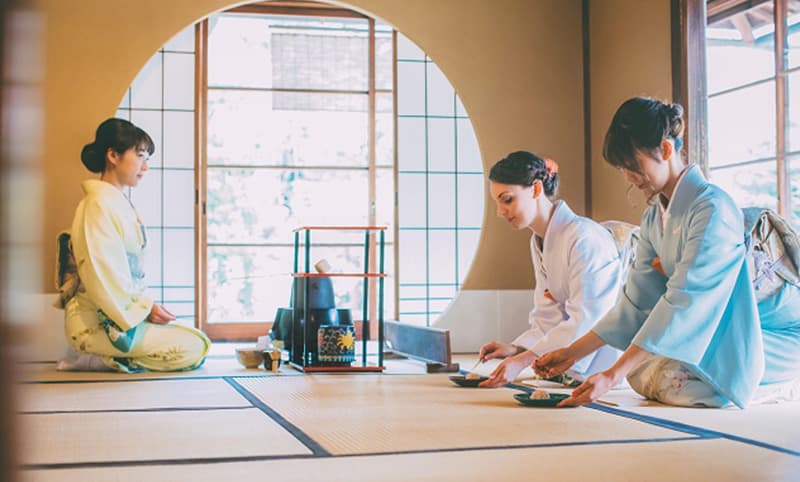
Matcha isn’t just a drink — it’s an experience. Mindful preparation brings calm and focus.
Rooted in Zen Buddhism, the Japanese tea ceremony (chanoyu) is a deliberate practice that emphasizes presence, respect, simplicity, and the careful appreciation of a single bowl of tea. Even outside formal settings, the core ideas encourage slow, attentive actions and hospitality.
Practicing these steps can become a short meditation: a moment to slow down, focus on sensory details (aroma, color, texture), and connect with others through an intentional act of hospitality.
Bring matcha into your daily life.
Copyright © 2025
The Sip Society.
All rights reserved.